From vibe-coded app to first building live in 17 days.
WareSpace built a leasing app with AI coding tools in about two weeks. It took deposits, held tenant data, and posted straight into the accounting system. We made it ready for real tenants and real money, and the first building went live 17 days after the audit.
- From audit to the first building live
- 17 days
- In the app itself, with 12 launch-relevant gaps in the systems around it
- 0 Critical
- Automated tests, in three weeks
- 36 → 551
- Tenant sign-up, down from 20–25 minutes in a manager's office
- Under 5 min
Where they started
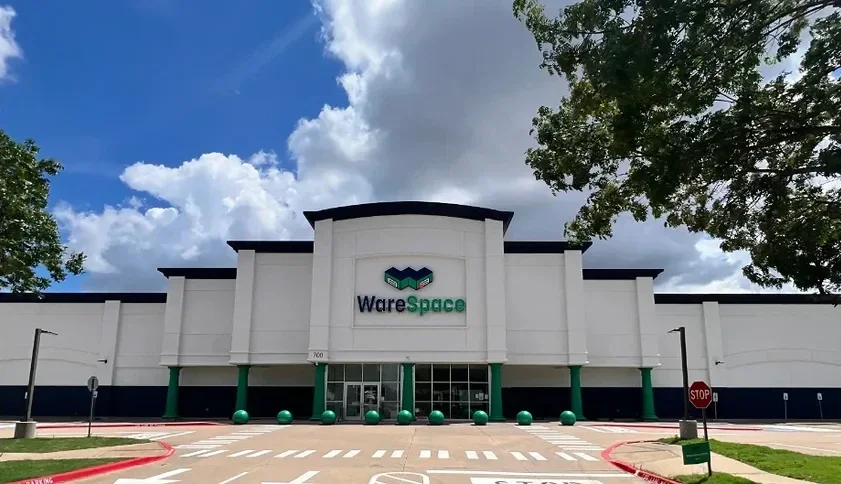
WareSpace provides small, all-inclusive warehouse spaces for businesses that are too big for a garage and too smart for a traditional warehouse lease. It runs more than 30 buildings. In June, a two-person team on the business side built a leasing app with AI coding tools in about two weeks: Stripe deposits, tenant personal data, and postings straight into the accounting system. The first building was going live in under three weeks, and nobody outside that team had read the code.
The problem
“What I was looking for was just someone to make sure PII was secure, that we didn't have any glaring security vulnerabilities in our code and database, and to make sure the app wouldn't break when being used in real life.”
That was the ask. Underneath it sat the question any business should ask of software it's about to run on. Does it change in a controlled way? Is each change reviewed before it reaches production? Does anything verify it? Are the live credentials somewhere one laptop can't walk off with? Before a charge lands in the books, does something check that it's right? Two people building at speed had produced a good app, with no development process around it yet. The 48-hour audit had to answer both the ask and the question underneath it.
What the audit found
The app itself held up: low risk, zero critical findings, encrypted personal data, every tenant able to see only their own records, and a tested payment flow. What was missing was the process around it. There was nowhere to try a change before tenants saw it, nothing to alert anyone when something broke, no separation between writing a change and approving it, and no recovery path if a payment failed partway through. The team was shipping 16 changes a day without the guardrails that make that pace safe.
“It's rare to find an engineer with deep technical knowledge, strong business acumen, and who also speaks ‘human’ to communicate with non-technical stakeholders.”
What we did
Within 48 hours, Damian closed the one finding that touched personal data and recommended launching with less automation than planned. Tenants could reserve and pay online, but a person checked every payment before it counted. That way, a bad day at launch would cost someone an hour, not a tenant a double charge.
Over the next three weeks, we shipped what the launch still needed: e-signature for the lease, with a guard so it can't be marked signed until the document is safely stored; error tracking, so someone hears about a failure before a tenant does; background work that finishes even when a step fails partway; automated checks on every change; and protection against fake reservations on the public deposit page.
Speed was the asset, so the fix couldn't be to slow down. Instead, we put a review loop on every change, sorted by whether it touched money, tenant data, or the books. Before launch, it caught a path where a tenant could be charged twice and a promo code that applied itself when its check failed. Both were fixed before they reached tenants.
Results, in full
Plano went live on July 6, 17 days after the audit. Park Hill, in Denver, followed on July 20. A tenant now reserves a space, signs the lease, and pays from their phone in under five minutes, where it used to take 20 to 25 minutes in a manager's office. Automated tests went from 36 to 551 over the three weeks.
Where it went next
The audit became a standing engagement. Damian remains engineering lead on the leasing app, and the same review loop and working sessions now cover product direction, the roadmap, and the other tools WareSpace is building on the same foundation.
You built it fast. Now find out if it will hold.
Tell us what you've built. On a short call, we'll ask some questions and tell you honestly whether an audit makes sense and what we'd look at first.